Estate Planning

With our life and legacy planning model, we help you confidently make legal and financial decisions so you know you have a plan to keep everyone you love out of court and out of conflict after you pass.

We help you to create a personalized plan that is best for you and your family.

Our Approach

You love your ʻohana and want to make sure they know exactly what to do and have a trusted advisor to help them if (and when) something happens.

Life is full of complex legal and financial decisions, and you do not have to make them alone.

You may know that your life and legacy are about much more than money but maybe you are not sure exactly how that translates into legal documents like Wills, Trusts, Health Care Directives, and Powers of Attorney. Maybe you are even thinking you can do it all yourself online given the new online technology being advertised daily that suggest you DIY your important planning.

We know (and will help you understand too) that do-it-yourself estate planning will leave your family lost and unsupported, and may even cause the loss of your assets when something happens to you. By then, it will be too late for your family to clean up the mess left behind.

With our help, you will feel confident that you have made all the right choices about the use of your resources while living, and that your family will be left with support and a clear plan if you become ill, are, injured or pass away.

Read on for more…
We love to help:

Single moms

Couples

Families with young keiki

Blended & adoptive families

Single boss babes

Horse & exotic pet owners

Families with special needs keiki

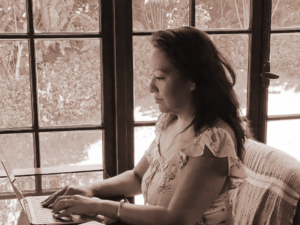
Aloha, I’m Shauna!

I am so glad you’re here! I was a single mom for 13 years, and I know the importance of building security, creating opportunities, and making every decision count for my kids. I am now a wifey and stepmom to two more amazing kids, and my estate plan has evolved to reflect those changes. My extensive experience in real estate, business, and estate planning law have helped me guide clients through complex property transactions and estate plans that honor both financial goals and personal values, always with a focus on clarity and empowerment. At the core of my work is the belief that wealth is more than money—it is freedom, stability, and the power to shape a legacy for yourself and those you love.

Hope to talk soon.

XOXO, Shauna

Schedule your FREE 15-minute consult

Lock Lock

1. Everything Stays Private

A little known fact about probate court – which is where you end up if you do not plan in advance or if you have a poorly drafted plan from the internet – is that it is all public. Your affairs, no matter how private you were during your lifetime, are made public for any and all to see. Don’t believe it? Do a Google search for “probate court live YouTube” and see what you find. Instead of finding yourself at the center of a YouTube hearing, plan in advance to keep your legal, financial, and family information private.

Shuffle Shuffle

2. You Have Complete Control

Without an estate plan, you are leaving all your most important decisions – legal, financial, and medical – up to a judge to make for you. Judges are extremely busy, they have never met you, and they do not know your values, your family, your needs, your desires, or your goals. Instead of relying on someone you have never met to carry out your wishes, take control over your affairs and document in advance who will make decisions for you.

Flow-tree Flow-tree

3. All Scenarios are Covered

Despite the popularity of internet-drafted wills and trusts, a huge drawback of cookie-cutter documents is they do not cover all contingencies your loved ones may face, specific to your family dynamics and assets. How could they? As with all things, you get what you pay for. Our life and legacy planning process educates you on how we protect everyone and everything you love so together we can ensure your estate plan comprehensively covers your unique situation.

3. You are Being a Good Steward

Life and legacy planning is not only about incapacity and death – it is equally about intentionally planning for your life. Our clients consistently tell us that our unique life and legacy planning process results in their becoming better parents, stronger business owners, and wiser citizens of the community simply because of how we help them look at everything they have and everyone they love to design their personalized estate plan.

Our 4 Step Estate Planning Process

Attend a Planning Session

  • Identify Your Goals
  • Select Your Plan
  • Design a Plan to Reach Your Goals

We Create Your Plan

  • Complete Your Asset Inventory
  • Confirm Names & Contact Information
  • Review Your Decisions

Review & Sign Your Plan

  • Review Your Funding Toolkit
  • Receive Your Detailed Planning Binder
  • Complete Your Client Experience Form

After You Sign Your Plan

  • “Fund” Your Trust
  • Check-In or Attend Funding Workshop
  • Ongoing Client Care & Plan Monitoring

Areas of Practice

Business Law

  • Business Formation
  • Founding Documents
  • Acquisitions and Mergers
  • State Regulatory Compliance
  • Executive Consulting

Trusts & Estate Planning

  • Legacy Family Trusts
  • Single Moms with keiki
  • Kūpuna & Medicaid
  • Special Needs Individuals
  • Holistic ‘Ohana Plans
  • Single Individuals
  • Simple to Complex Estate Plans

Real Estate Law

  • Residential & Commercial Purchases
  • Contract Review
  • Due Diligence
  • Title Review
  • Judicial Foreclosure
  • Regulatory Compliance
  • Entitlements

Frequently Asked Questions

An estate plan comprehensively covers contingencies beyond the important questions of who receives what assets of an estate on your passing. Estate planning is a complete contingency plan or set of legal instructions that also cover incapacity and disability, and guardianship planning for your children. Estate planning protects you and the people you love by keeping them out of court and conflict. In sum, an estate plan is more than just a will. It encompasses multiple legal documents designed to protect you and your family now and represent your final wishes on your passing. Other than a will, an estate plan may also include a living trust, advance directive, financial power of attorney, and short and long term guardianship planning for your children.

Generally, yes, IF:

  • You own any real estate property
  • You have a life insurance policy
  • You own assets in excess of $100,000
  • You own a business
  • You have a blended, unique, or complicated family situation
  • You have specific and detailed instructions for the distribution of your property or assets

If none of these apply to you, a will may be sufficient for you. Schedule a free 15 minute consult with us today, and we will help you determine the best plan for you.

Yes. A financial power of attorney lets you designate the person of your choosing, called an attorney-in-fact, to make financial decisions, from the mundane to the crucial, for you if you are incapacitated or otherwise unable to manage your own finances. If something happens to you, your attorney-in-fact will be ready to make sure you fulfill routine financial obligations and make serious decisions about how to finance your medical care. No matter your age, a financial power of attorney is an important part of your estate plan to protect you now.

Probate is the court proceedings that oversee the transfer of assets from the deceased to the deceased’s heirs or beneficiaries. Probate can be thought of as the plan for those who failed to create an estate plan. Every state has its own probate court system where a judge gets involved and picks who oversees the process, making sure your assets go to the entitled heirs. A probate court also makes decisions when someone cannot take care of themselves because they are a minor or become incapacitated. A probate judge gets to select the person in charge of your assets, body, or medical decisions. In probate, court records are public, and a judge makes decisions along the way. A probate attorney in Orange County can help you avoid probate. Instead of a court potentially making important decisions about your assets or medical care, an estate planning attorney in Orange County can make sure you have a plan.

If your estate planning does not avoid probate, you are choosing to let a probate judge determine who looks after your finances if you are incapacitated, who is a guardian and raises your children if something happens to you, and, on your passing, who oversees getting your assets gathered, inventoried, and distributed. Along with giving a probate judge choice over these important decisions, a probate court’s involvement also usually makes the process more difficult, expensive, and public. Most of all, you do not know how it will turn out. The point of much estate planning is avoiding probate and putting you in charge of these important decisions.

A living trust, also sometimes called a family or revocable trust, is a private legal document designed to help you avoid probate. A trust can immediately distribute your assets upon passing. Critically, it does not need to be filed with a court or reviewed by a court before anything happens. This means the successor trustee, the person you name to administer your trust on your passing or incapacitation, can begin distributing your assets without court involvement. Estate planning with a living trust lets you entirely avoid probate. However, just having a living trust is not enough to avoid probate; an estate planning attorney in Orange County can ensure your living trust is fully funded and properly drafted to avoid probate.

This question is personal for us because we have children. The best guardian is someone who would parent like you would. It is important to think through the potential guardian’s parenting philosophy and style. In considering a potential guardian, ask yourself questions like, “Does the potential guardian share my beliefs and values about my children’s education, discipline, extracurricular activity involvement, and religion or spirituality?” Focusing on whether a potential guardian would make decisions for your children that align with your parenting beliefs and values; making this important decision is one of the best places to start.

Many parents believe choosing a guardian is solely a financial decision. However, you ideally will be leaving enough financial support for your children’s upbringing with your estate planning. With your children’s finances secure, you can focus on the important question: “Who will raise my children most closely aligned with my values and how I would raise them?”

Both wills and trusts seek to distribute your assets upon your passing, but differ in important ways. Wills and trusts can also work together in estate planning. A will must be filed with a probate court. Once filed, a will becomes a public record. It must be reviewed and approved by a probate judge before anyone may receive assets from your estate. The probate process is often lengthy, taking many months or even longer. A trust, however, is a completely private document drafted by a trust attorney in Orange County. Only you and your heirs get to see it. A trust does not become part of a public court file. The successor trustee, the person you choose to administer your trust upon your passing or incapacitation, can act immediately to distribute your estate without going to court or making any court filings. With a properly drafted and funded trust, you avoid probate. Many estate plans, however, will need both a trust and a will: a centerpiece trust and a pour-over will to complement it. A pour-over will serves to “pour” assets into your living trust, if needed.

The typical estate planning process takes 4-6 weeks from start to finish: from your first appointment to the signing ceremony. At your first appointment, you will meet with your estate planning attorney and decide whether to move forward with the peace of mind that your family is protected. We will discuss the exact fixed fee once we determine your needs and goals. We will then prepare all the legal documents that comprise your estate plan. About a month later, you will return for your signing ceremony to sign the prepared legal documents, and your estate plan will be fully in place. While your estate plan may be complete, the signing ceremony just starts the lifetime relationship we maintain with our clients. We stay in touch, host special client-only webinars, and perform no-charge, three-year review meetings with you, so your plan always stays up-to-date.

What our clients say

Shauna’s ability to gently facilitate conversations around difficult topics made my experience both productive and enjoyable.

Shauna’s care and focus of my plan was always motivated by the ‘why’. ‘Why is this important to you?’ I feel confident that my wishes will be followed when I pass on.

Compassionate and gracious are not words that I thought I would use to describe a lawyer – until I met Shauna. Every step of the process was comfortable and easy.

Latest Articles

Including Digital Assets In Your Estate Plan – Pt 2

Read Part 1 of this Article HERE Five Steps to Include Digital Assets in Your Estate Plan If you’re like most people, you probably own a mix of digital assets—some valuable, some sentimental, and some you might not want anyone…